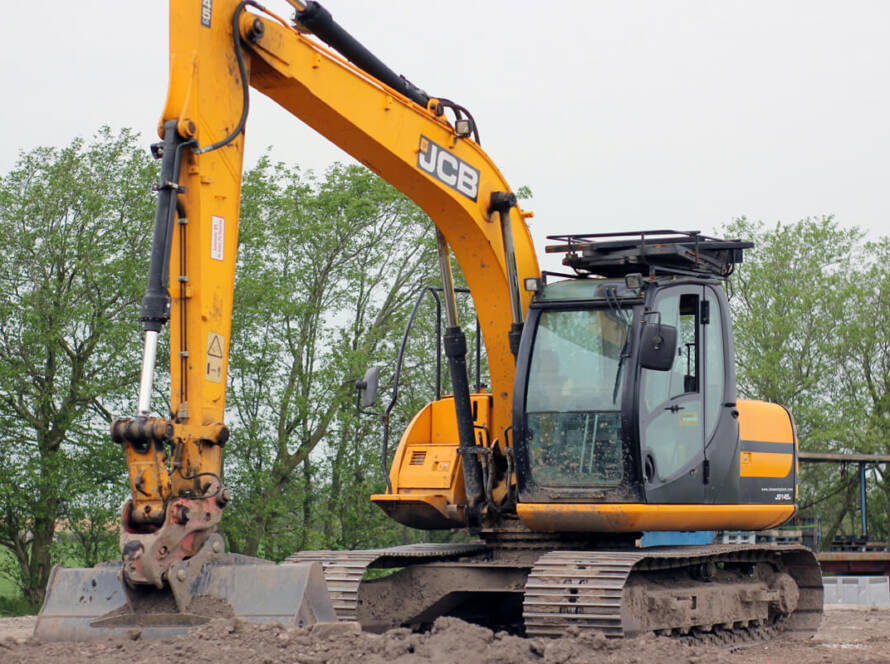
Construction site managers are responsible for overseeing an entire construction site, though on large projects they may manage specific sections.
This role is diverse and not for everyone, but if you feel that you can take on the responsibility of a construction site manager, then look no further for guidance.
What is a site manager?
A building site manager (also known as a construction site manager or site agent) is in charge of overseeing the day-to-day running of a construction site.
Their role consists of supervising a construction project, so they take responsibility for ensuring every contractor is working safely and efficiently.
As well as liaising with contractors, they’ll also commonly work in collaboration with architects and surveyors.
A construction site manager helps the entire team stay on track, ensuring the project is finished on time and within budget.
A building site manager will generally work in one of the five project groups:
- Residential
- Commercial
- Industrial
- Environmental or
- Infrastructure
Your experience and area of interest in construction often dictates which you end up working in.
What are the responsibilities of a construction site manager?
Due to the supervisory nature of this position, the roles and responsibilities of a site manager are wide and varied.
Depending on the size of a building project, these duties can range from ensuring the project stays on budget to ordering materials and liaising with clients.
It’s important to also note that a building site manager must be versatile because they will often be required to split their time between working on-site, working in an office, and working in a temporary office built on site.
Frequently working in a variety of weathers (hot, cold, and wet!), they must be comfortable wearing protective and high-visibility clothing, too.
While construction site managers tend to work the standard working week, they may be expected to work during weekends or evenings to meet deadlines, when necessary.
Alternatively, the nature of some construction projects means the building work can only be undertaken at night or during public holidays.
As a building site manager, you may be required to:
- Supervise workers
- Hire subcontractors
- Monitor and report progress to staff
- Liaise with clients
- Purchase materials for the project
- Conduct safety inspections
- Carry out quality inspections
- Motivate the construction team
- Solve problems
- Prepare and create progress reports
- Analyse site reports, designs, and drawings
- Utilise specialist computer programmes
- Work in a variety of environments
- Liaise with the community and handle public demands
- Interpersonal skills
How much does a construction site manager earn?
According to Glassdoor, a site manager in construction can earn anywhere between £37,000 to £58,000 per year.
However, the precise salary for this position varies depending on the location, employer, and level of responsibility.
With an average annual salary of £48,000 in the UK, there’s scope to earn a higher salary as a construction site manager if you progress into specialised roles, start your own construction-related business, or gain chartered status which showcases your competency.
Construction manager qualifications in the UK
Construction site managers need higher level qualifications than most site workers because they’re responsible for everything on site.
If you already work within the construction industry, you may be able to become a construction site manager by completing site manager training courses.
Site manager qualifications include:
- SMSTS (Site Management Safety Training Scheme)
- National Vocational Qualification (NVQ) Level 6 in Construction Site Management
- Level 6 Civil Engineering Site Management Degree
- Higher National Certificate (HNC) in Construction or related disciplines
- Higher National Diploma (HND) in Construction Management or related disciplines
- Foundation Degree in Construction Management
- Degree in Construction Management
- Apprenticeship in Construction Site Manager
- Higher Apprenticeship in Construction Site Manager
You may also need:
- High-Risk First Aid
- Confined Spaces (If it applies to the site)
- Qualifications in the work being carried out
What construction site manager qualifications can you get with SB Skills?
The SMSTS is a management course designed to teach managers or potential managers, the legislation involved in the building, construction, and civil engineering industries.
Construction site managers will also learn the importance of carrying out risk assessments, putting control measures in place, and adhering to health and safety regulations to create a culture of safety awareness.
The SMSTS course is a five-day classroom-based learning experience that’s valid for five years.
This can be renewed with a short two-day refresher.
NVQ Level 6 in Construction Site Management
The NVQ Level 6 in Construction Site Management is one of the highest levels available and is equivalent to a bachelor’s degree.
It’s assessed based on workplace competence rather than academic study.
Taking anywhere between four weeks to 12 months to complete (depending on the applicant’s availability, motivation, and desire to fast track the course), this course is an in-depth assessment of your competency at construction site management.
This is one of the ultimate NVQs in the construction industry with very few above it, bar Level 7 qualifications, such as the NVQ Level 7 in Construction Senior Management.
Unsure which qualification would be most appropriate for you?
Speak to our helpful team to learn more!
How to become a construction manager
There are a few routes that you can take to become a construction site manager, including:
Apprenticeship
An apprenticeship is open to all individuals over the age of 16.
These opportunities provide applicants with employment (at least 30 hours a week), while allowing them to split their time between gaining this work experience and obtaining education from either a college or training provider.
You can either apply for an apprenticeship in construction site management or design and construction management.
They often take between three and four years to complete, so it’s worth noting they still require significant commitment.
Through the apprenticeship route, you can start at almost any entry point, depending on your grades an experience.
If you have five GCSEs at grades 9 to 4 (A* to C), you can start at the Level 2.
However, if you have A-levels, it’s possible to start at the manager apprenticeship. This means that you will be on a fast track to management with all your qualifications included.
The flexibility of this route and the opportunity it presents to young people (in terms of allowing them to start earning money from a young age) can be incredibly influential for teenagers looking to kickstart their career in construction.
University
The university route is also an option – each university course will have specific entry requirements, with the duration of study often being between three and four years.
Depending on your A-level results, level 3 diploma qualifications, or your life experience if you’re applying as a mature student, you will have the choice of taking a foundation degree, a Higher National Diploma (HND), or an undergraduate degree accredited by the Chartered Institute of Building (CIOB).
Suitable subjects of study for one of these construction-related university degrees include building studies, estimating, and surveying, alongside construction, and civil engineering.
The SMSTS management course is also available to those with a bachelor’s degree.
As mentioned previously, it explains the importance of risk assessments, control measures, and health and safety regulations to provide site managers with a comprehensive overview of construction legislation and is valid for five years.
The Black CSCS card is most commonly obtained via an NVQ Level 6 qualification, though degree holders may qualify through alternative routes and they can also apply for the Academically Qualified Person (AQP) card which is also a very prestigious card.
Work
If you’d rather take a more traditional route, you may decide to find a job in a relevant trade (such as an estimator, building technician, surveyor, or site supervisor).
From there, you can take courses that will upskill you and work your way up to management.
This could be a lengthy process, but chances are if you’re reading this, you’re almost there and looking to progress.
From this point, you should undertake your SMSTS course and look to achieve your Black CSCS card.
Skills
If you want to increase your chances of obtaining either employment or professional experience within the construction industry, with a view to becoming a building site manager, you may want to consider expanding upon your current skillset.
Some additional skills that could help you to achieve your goal of becoming a construction site manager include:
- Time management
- Leadership qualities
- Understanding of construction
- Excellent verbal communication skills
- Problem-solving abilities
- Business management
- Strong desire to take initiative
- Organisational skills
- Maths knowledge
- Computer literacy and the ability to use relevant software
Ready to become a qualified construction site manager? Get help from the professional team at SB Skills Solutions!
Construction site manager courses at SB Skills Solutions
If you’d like to explore the more traditional route of finding a job in trade and then taking a construction site manager course, contact SB Skills Solutions today.
With the Construction Site Management NVQ Level 6 qualification under your belt, you can increase your earning potential, secure a sought-after building site manager position, and work on your construction skills, competence, experience, and knowledge.
Guided by the experienced NVQ assessors at SB Skills Solutions (every assessor holds the Level 6 Construction Site manager NVQ, PTLLS (Preparing to Teach in the Lifelong Learning Sector), or Assessor Award with a minimum of 10 years’ relevant experience), we make obtaining this qualification straightforward.
With the support of our qualified assessors, you can achieve all the necessary qualifications to be a site manager. To learn more about the course, its contents, or our prices, please don’t hesitate to contact us today.
You can also call us on 01695 558420 or send us your enquiry in an email to info@sbskills.co.uk.
Once we’ve received your enquiry, you can rest assured that a member of our team will be in touch soon to find out more about your site manager training requirements.