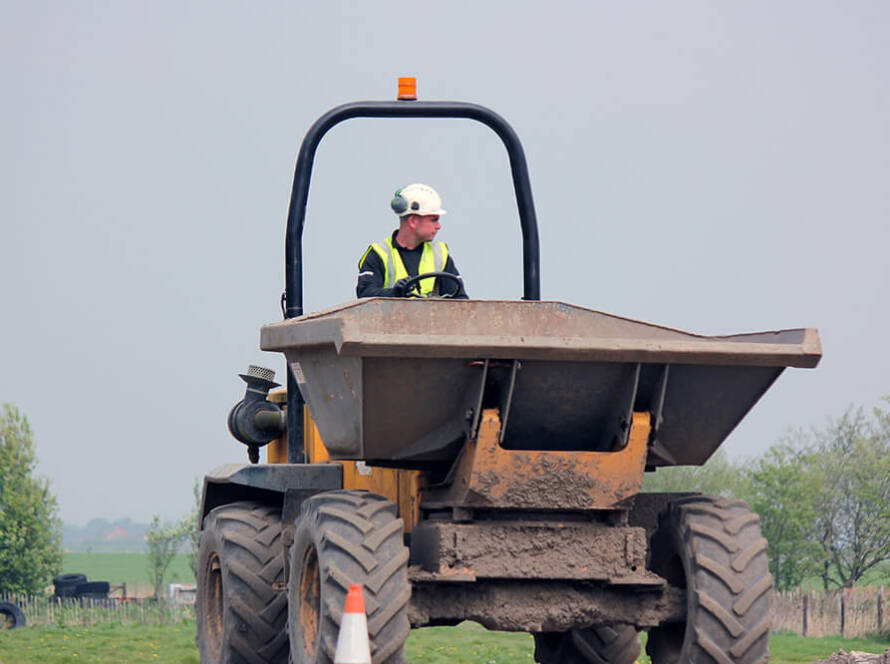
Safe machine control, site awareness and clear communication are essential plant operator skills. Whether digging foundations, moving materials or compacting ground, operators need practical ability and sound judgement to complete their work safely and accurately.
This guide explores the skills construction plant operators need, the training and certification routes available in the UK, and opportunities for career progression.
Understanding the Role of a Plant Operator
Construction plant operators use machinery to prepare ground, excavate, move materials, lift loads and compact surfaces. Their responsibilities depend on their training, the equipment used and the task being carried out.
Typical duties may include:
- Operating 180-degree and 360-degree excavators to dig trenches and foundations.
- Moving earth and materials using dumpers, dozers or excavators.
- Using loading shovels to collect and load loose materials.
- Operating cranes as part of a lifting team.
- Using rollers to compact soil, stone or asphalt.
- Operating forklifts or telehandlers to move and position materials.
Each machine requires appropriate training and familiarity. Developing competence across additional machine categories can widen an operator’s employment opportunities.
Essential Plant Operator Skills
Machine Operation and Control
Operators need to understand the controls, capabilities and limitations of their machine and its attachments. They should be trained, competent and authorised to operate the specific equipment they use.
Smooth, controlled movements help operators work accurately. For example, careful excavator control supports precise digging, while controlled dumper movements help keep materials secure along designated routes.
Good operation also means recognising the machine’s limits and avoiding unnecessary movements or force.
Pre-Use Checks and Defect Reporting
Pre-use checks help operators identify problems before work begins. These checks should follow the manufacturer’s instructions and site procedures.
Depending on the machine, checks may include tyres or tracks, brakes, hydraulic hoses, mirrors, cameras and warning devices. Operators also need to know how to record defects and report them to the appropriate person.
A safety-critical fault must be addressed before the equipment is used. Recognising and reporting problems promptly protects people and helps reduce avoidable downtime.
Site Safety Awareness
Operators must understand the hazards around them and the controls established for the task. These may include pedestrian exclusion areas, designated traffic routes and restrictions around excavations.
Before excavation, operators need to understand the information and procedures provided for locating and avoiding underground services. Overhead power lines also require specific precautions and agreed working arrangements.
Site awareness is an ongoing responsibility. Conditions can change throughout a shift, so operators must remain alert and reassess when necessary.
Spatial Awareness
Plant machinery needs sufficient space to travel, turn and carry out its work. Operators must judge distances and clearances while accounting for blind spots, attachments and nearby obstacles.
An excavator operator, for example, needs to consider the machine’s swing area. A telehandler operator must account for the space occupied by both the machine and its load.
Good spatial awareness supports accurate positioning and helps prevent people from being struck or trapped.
Communication and Teamwork
Plant operators work with supervisors, vehicle marshals, slinger/signallers and other trades. Clear communication helps everyone understand the task and the arrangements for completing it.
Operators should follow agreed signals and radio procedures, and ask for clarification when an instruction is unclear. When reversing under a banksman’s direction, they must stop if they lose sight of the banksman.
Speaking up about restricted visibility, unsafe access or changing conditions is an essential part of teamwork.
Planning and Judgement
Before starting, operators need to understand the work instructions, intended route, ground conditions and any load involved.
Uneven or unstable ground can affect machine stability, while lifting operations require suitable planning and coordination. Operators must recognise when the planned task cannot proceed safely and seek guidance.
Effective planning also improves productivity. Checking the required excavation depth or material placement location before starting can reduce mistakes and unnecessary rework.
Equipment Care
Operators contribute to reliable machine performance by monitoring its condition and completing routine care within their training and the manufacturer’s instructions.
This may include keeping windows, mirrors and cameras clean, checking fluid levels where instructed, and reporting leaks, unusual noises or worn components.
Repairs and maintenance should only be carried out by people with the appropriate competence and authorisation. Knowing when to involve maintenance staff is part of responsible equipment care.
Training and Certification for Plant Operators
Plant operator training ranges from machine-specific novice courses for beginners to refresher training and assessments for experienced operators. Training combines theory and practical instruction to help learners develop essential plant operator skills.
A common route into construction plant operation is to complete appropriate training, pass the relevant assessments and meet the scheme’s health and safety test requirements. For entrants who do not already hold the relevant vocational qualification, this can lead to a CPCS Red Trained Operator Card or an NPORS CSCS Red Trained Operator Card.
The next stage is to build practical experience and achieve the relevant Plant Operations NVQ or SVQ, with units covering the machine categories held on the card. Operators should aim to complete this during the red card’s two-year validity period. Once the qualification and the scheme’s upgrade requirements have been met, they can progress to a Blue Competent Operator Card.
Operators can add further machine categories through appropriate training and assessments. Before booking, they should check which scheme and categories their intended employer or workplace accepts or requires.
The official CPCS and NPORS websites provide information about certification and progression. An approved training centre can also explain course options, entry requirements and the steps towards demonstrating competence.
Career Advancement Opportunities for Plant Operators
Expanding Operating Skills
Training on additional machinery can open up a wider range of work. An operator experienced with excavators, for example, may choose to develop competence with dumpers, rollers or telehandlers.
Specialist training in machine control technology, precision earthworks or particular attachments can also support progression into more demanding tasks. Additional training should be matched with practical experience in the work involved.
Moving into Supervision
Experienced operators may progress into lead operator, plant supervisor or wider site supervision roles. These positions require planning, communication and team management skills alongside technical knowledge.
A Level 3 NVQ Diploma in Occupational Work Supervision can support those with relevant supervisory responsibilities. SSSTS provides training in site supervision health and safety.
For wider site supervision, a relevant Level 4 NVQ in Construction Site Supervision may be appropriate. SMSTS provides training in managing construction site health and safety, although it is not a substitute for a full management qualification or relevant experience.
Specialising in Lifting Operations
Operators with suitable experience may explore progression into lifting supervision or planning. Routes include Crane/Lifting Operations Supervisor and Appointed Person – Lifting Operations training.
These roles carry distinct responsibilities. Operators should discuss entry requirements and the experience needed with an approved provider before choosing a course.
Becoming a Trainer or Assessor
Experienced plant operators may also move into teaching or assessing others.
A Level 3 Award in Education and Training can provide a foundation for teaching, while qualifications such as the Level 3 Certificate in Assessing Vocational Achievement can support assessment roles.
Candidates must also meet the relevant training scheme, provider or awarding organisation’s requirements. Technical experience and a qualification alone do not automatically confer instructor or assessor approval.
Taking the Next Step
Becoming a dependable plant operator takes more than learning the controls. Careful preparation, safe judgement, clear communication and continued learning all contribute to a successful career.
Developing your plant operator skills through training and practical experience can help you prepare for greater responsibility.
Contact our team to discuss the machinery you want to operate, the qualifications you need and the training route that suits you.